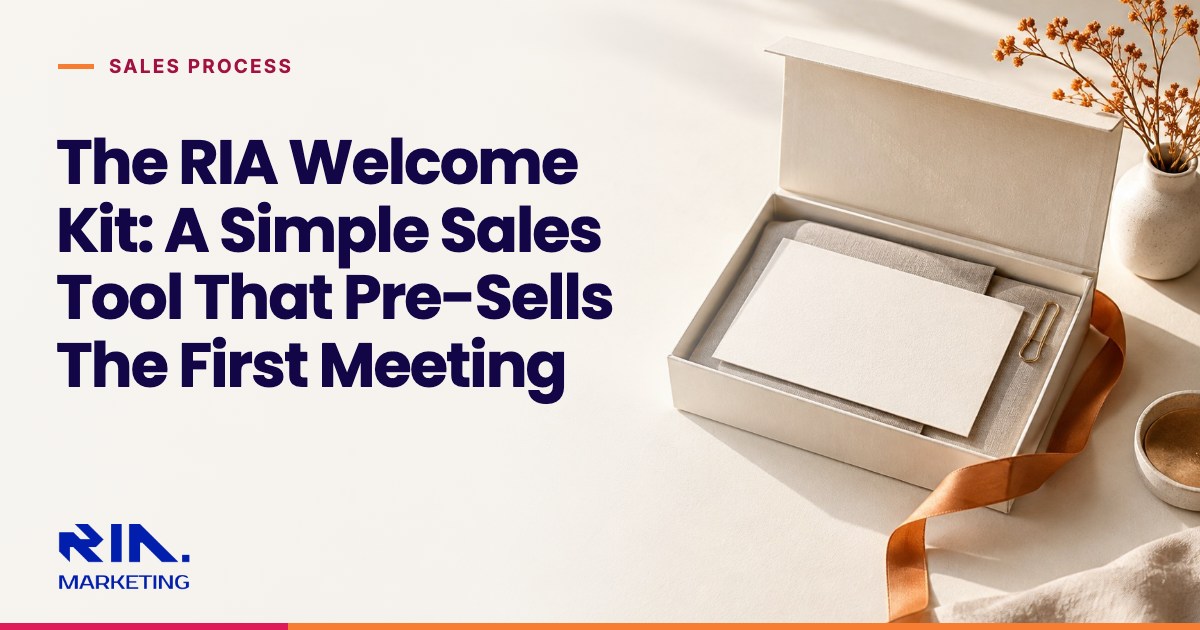
A welcome kit is a short package sent before a first meeting that answers the questions prospects arrive with: what the meeting will cover, who you are, what you do, how you charge, and what happens next. The point is to handle the predictable explanations in writing, so meeting time goes to the prospect's situation instead of your introduction.
Key Takeaways
- Send the kit before the meeting so the basic introduction happens in writing and the meeting can start as a conversation.
- Include six pieces: agenda, a human bio, a plain-language service menu, reflection questions, a fee overview, and next steps.
- Write the agenda so the prospect knows what the meeting covers and that no on-the-spot decision is expected.
- Describe how you charge in plain terms in the kit; the fee structure is easier to read in advance than to raise cold in the meeting.
- Give the prospect a few questions to consider in advance so the conversation starts on their situation.
Why A Welcome Kit Changes The Meeting
People are nervous before a first meeting with an advisor. They are not sure what to expect, whether they will be pressured, or whether they will look uninformed. That anxiety makes them guarded, and guarded people are hard to help.
A welcome kit lowers that anxiety. When someone knows the agenda, understands how you work, and has had a chance to think about their own situation, they arrive calmer and more engaged. You are no longer a mystery. You are a professional who respects their time enough to prepare them.
It also signals competence. A firm that sends a clear, organized welcome kit looks like a firm that runs a clear, organized practice. That impression forms before you say a word, and it works in your favor.
Finally, it shifts the tone. Instead of starting with a pitch, you start with a conversation, because the pitch already happened quietly in the kit. That single change makes first meetings feel more like collaboration and less like a sales call.
Include A Clear Agenda
Start with the agenda. Tell the prospect exactly what the meeting will cover and roughly how long it will take. This is the piece that does the most to reduce anxiety, because uncertainty about the meeting itself is what makes people tense.
Lay it out simply. What you will talk about first, what comes next, and what you hope to accomplish together by the end. Make it clear that the meeting is a conversation, not a commitment, and that no one is expected to make a decision on the spot.
The agenda also quietly puts you in control of the meeting in a good way. When both people agree on the plan in advance, the conversation stays focused and productive. You spend your time on what matters instead of drifting or backtracking.
Include A Real Bio
People want to know who they are trusting with their money. A short, human bio does that work before the meeting so you do not have to spend the opening minutes on it.
Keep it genuine. A little about your background and how you got into this work, what kind of clients you serve, and what you care about as an advisor. Skip the resume padding and the generic language. The goal is for the prospect to feel like they already have a sense of you as a person.
A photo helps. So does a touch of personality. People hire advisors they feel comfortable with, and comfort starts with familiarity. A bio that reads like a real person beats a list of credentials every time, even though the credentials matter too. Put them in, but do not lead with them.
Include A Simple Service Menu
Prospects often do not know exactly what an advisor does. They have a vague idea, shaped by whatever they have encountered before. A simple service menu clears that up and prevents mismatched expectations.
Describe what you actually offer in plain language. What areas you help with, how you work with clients over time, and what a relationship with your firm looks like in practice. Avoid jargon and avoid trying to be everything to everyone. Clarity about what you do, and quietly what you do not do, helps the right people self select.
This is not the place for a hard sell. It is the place for honest description. When the prospect understands your services before the meeting, the conversation can go deeper faster, because you are not spending time on basic explanation.
Include Questions For Them To Consider
This is the piece most advisors skip, and it might be the most valuable. Include a short set of questions for the prospect to think about before the meeting. Not a form to fill out, just prompts to get them reflecting.
Ask about what is on their mind financially, what prompted them to seek an advisor, what they hope to accomplish, and what has worked or not worked for them in the past. These questions do two things. They get the prospect thinking about their own situation, and they surface the topics that matter most to them.
When someone arrives having considered these questions, the meeting is dramatically better. They are ready to talk about substance instead of warming up from scratch. And you learn what actually matters to them, which lets you make the conversation about them rather than about you.
Include A Straightforward Fee Overview
Fees are the elephant in the room at most first meetings. People wonder about them, but they are often afraid to ask, and advisors are often awkward about bringing them up. Putting a clear fee overview in the welcome kit removes that tension entirely.
You do not need to lay out every detail of every scenario. Explain how you charge in plain terms, so the prospect understands the general structure before they arrive. Being upfront about fees builds trust. It signals that you have nothing to hide and that you respect the prospect enough to be straight with them.
This also filters out mismatches early, which is a favor to everyone. Someone who is not comfortable with your structure can figure that out before investing time in a meeting. The people who do show up have already made peace with how you work, which makes the conversation far more productive.
Include Clear Next Steps
End the kit by explaining what happens after the meeting. People want to know what they are getting into and how much commitment is involved. Spelling out the next steps removes the fear that the first meeting is a trap that leads to immediate pressure.
Describe the process simply. What the first meeting leads to, what a decision looks like, and how someone becomes a client if it is a good fit. Make it clear that there is no obligation and that the pace is theirs to control. That reassurance makes people more willing to engage openly, because they are not bracing for a hard close.
Clear next steps also make you look organized and trustworthy. A firm that has a clear process is a firm that knows what it is doing. That impression carries real weight when someone is deciding whom to trust.
How It Improves Meeting Quality
Put all these pieces together and the effect is significant. The prospect arrives informed, relaxed, and prepared. The awkward opening minutes are gone. The fee conversation has already happened. The prospect has thought about their own situation and knows what to expect.
That means the meeting itself can be what it should be, a real conversation about the prospect's life and how you might help. You spend your time on substance instead of setup. And because the prospect feels respected and prepared, they engage more openly, which leads to better outcomes for both of you.
There is a quieter benefit too. The welcome kit does part of the selling without you having to sell. By the time you meet, the prospect already understands who you are, what you do, how you charge, and what to expect. The meeting becomes about fit rather than persuasion, and fit is a much better basis for a lasting relationship.
Keep the kit reviewed and current. Anything you put in writing and send to prospects should clear whatever review process your firm uses. A welcome kit is a marketing document, and it deserves the same care as anything else you publish.
Ready To Build Yours
A welcome kit is one of the simplest, highest return tools an advisory firm can create, and almost no one does it well. Done right, it makes every first meeting more productive and every prospect more comfortable, without adding pressure or complexity.
That is the kind of practical growth system we help RIAs put in place. If you want a welcome kit that pre-sells your first meetings and makes your whole intake process feel effortless, let's talk. We will help you design one that fits your firm, reflects your voice, and makes your meetings noticeably better.
Related RIA Marketing Guides
Ready to turn marketing into a system?
Connect with our team at RIA.Marketing. We help advisory firms build practical, compliance-conscious systems for visibility, follow-up, and qualified inquiries.
Schedule Your Private Strategy Session